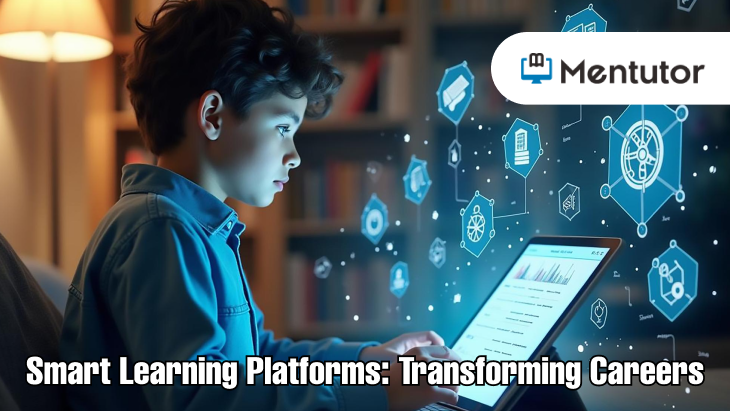



For decades, professional growth inside organizations depended on informal advice, occasional training programs, or trial-and-error experience. Employees often struggled to find the right mentor, while organizations found it difficult to manage mentorship programs at scale.
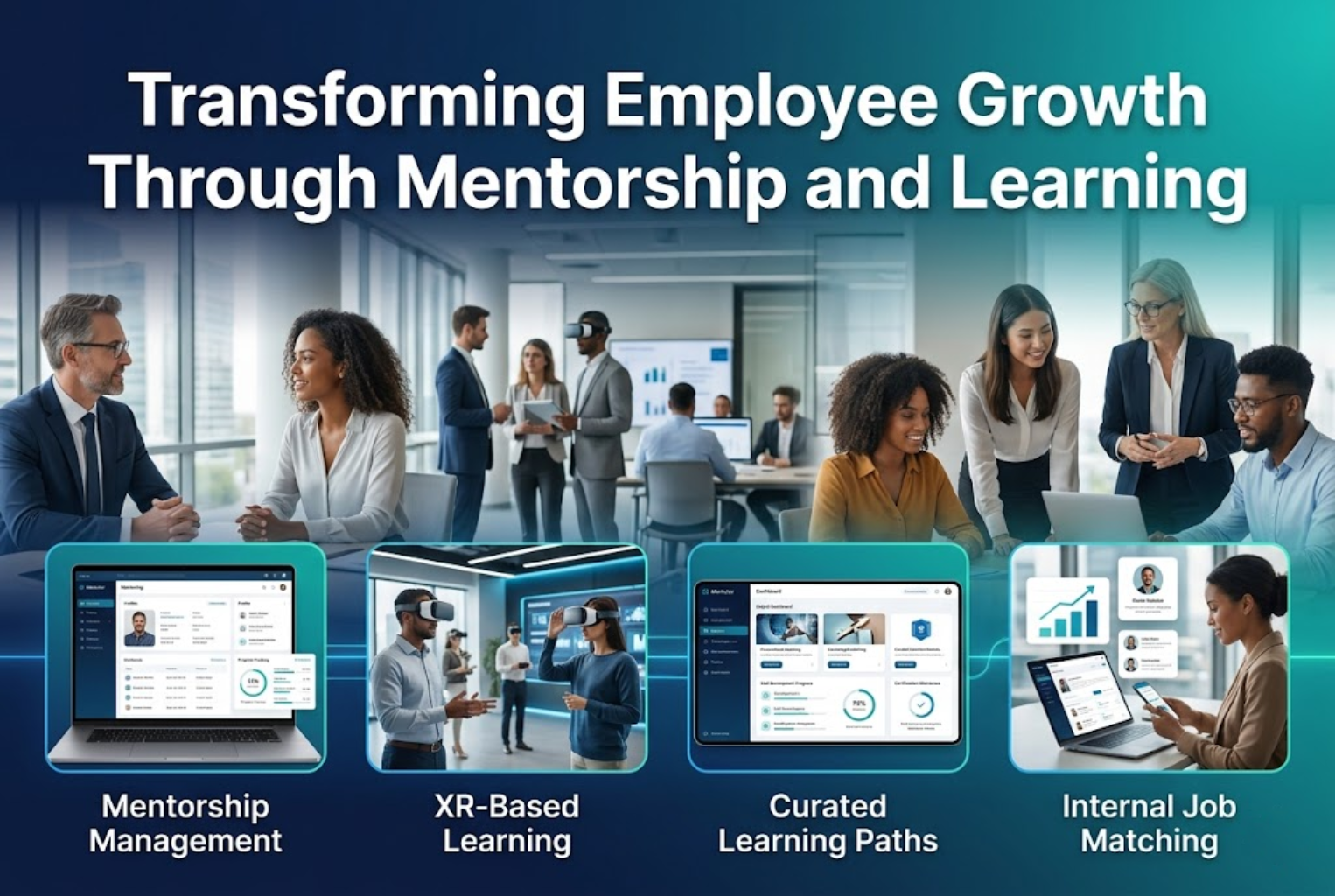
Today, the digital workplace is changing that reality. Intelligent mentorship platforms are redefining how companies develop talent, share knowledge, and prepare employees for future challenges. By combining mentorship management, smart matching technology, and immersive learning tools, these platforms are making mentorship more accessible, structured, and impactful than ever before.
Modern solutions like enterprise mentorship platforms provide organizations with a centralized way to connect employees with mentors, schedule sessions, track learning progress, and support long-term career development.
Why Mentorship Matters More Than Ever
The modern workforce is evolving rapidly. New technologies, shifting industries, and changing job roles require employees to continuously develop new skills. In this environment, mentorship has become one of the most powerful ways to accelerate learning.
A mentor can help employees:
- Navigate complex career decisions
- Learn practical industry insights
- Build leadership and communication skills
- Avoid common mistakes in professional growth
- Gain confidence when tackling new challenges
Organizations benefit as well. Companies with strong mentorship programs often experience higher employee engagement, better knowledge transfer, and improved retention rates.
However, traditional mentorship programs often struggle with scalability and structure.
The Limitations of Traditional Mentorship Programs
While mentorship has always been valuable, traditional systems often face several challenges:
Lack of Organization
Many mentorship programs rely on manual matching or informal connections. Without structure, employees may struggle to find mentors who match their goals.
Scheduling Difficulties
Coordinating mentorship sessions between busy professionals can be complicated without a centralized system.
Limited Visibility
Organizations often cannot track mentorship progress or measure its impact on employee development.
Inconsistent Experience
Without standardized frameworks, mentorship quality may vary widely between mentors.
These limitations highlight the need for smarter mentorship solutions.
How Digital Mentorship Platforms Are Changing the Game
Enterprise mentorship platforms are transforming how companies run mentorship programs by bringing everything into a single digital environment.
Centralized Mentorship Management
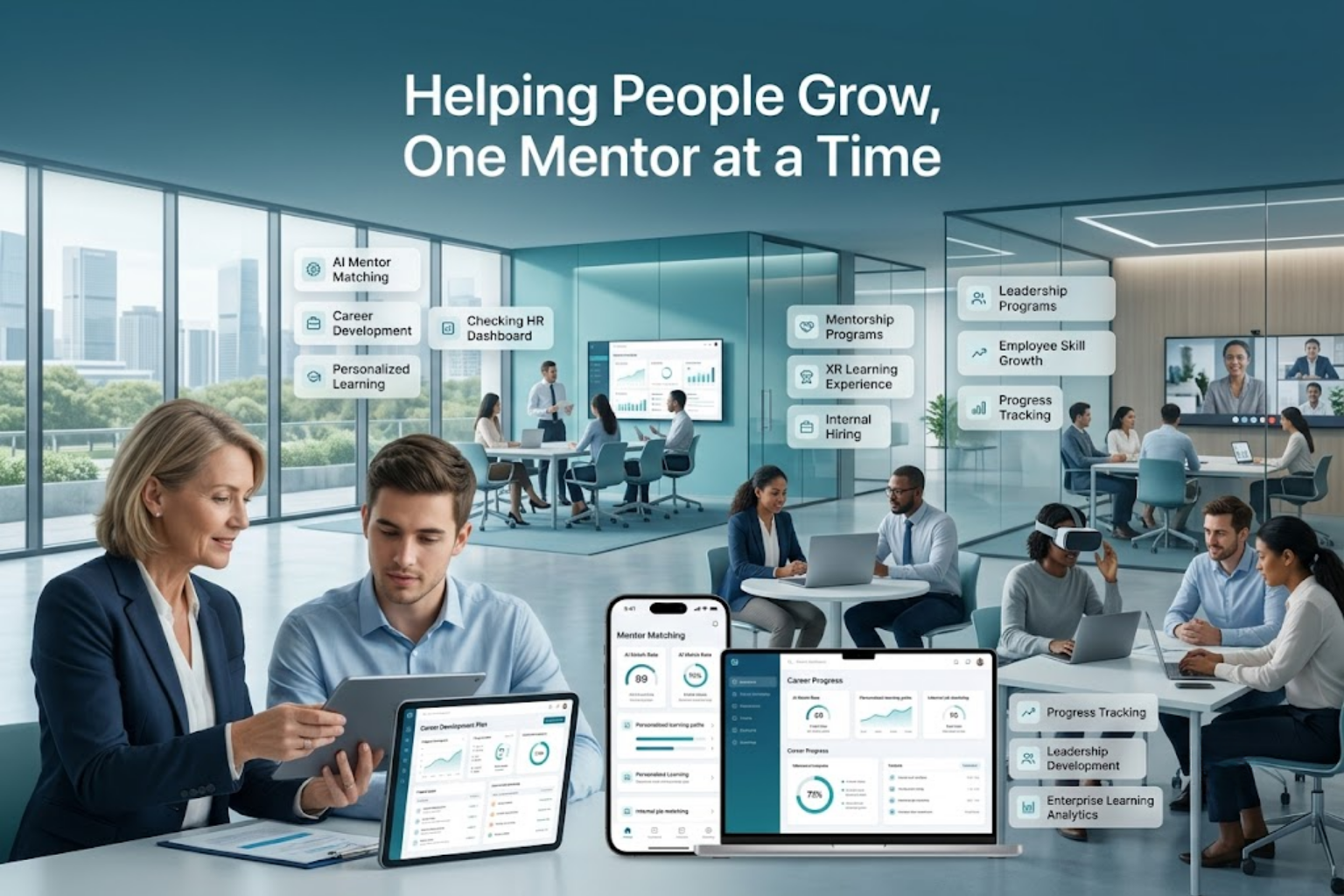
A modern mentorship platform allows organizations to manage every aspect of mentorship in one place. From mentor discovery to session scheduling and progress tracking, the entire experience becomes streamlined and transparent.
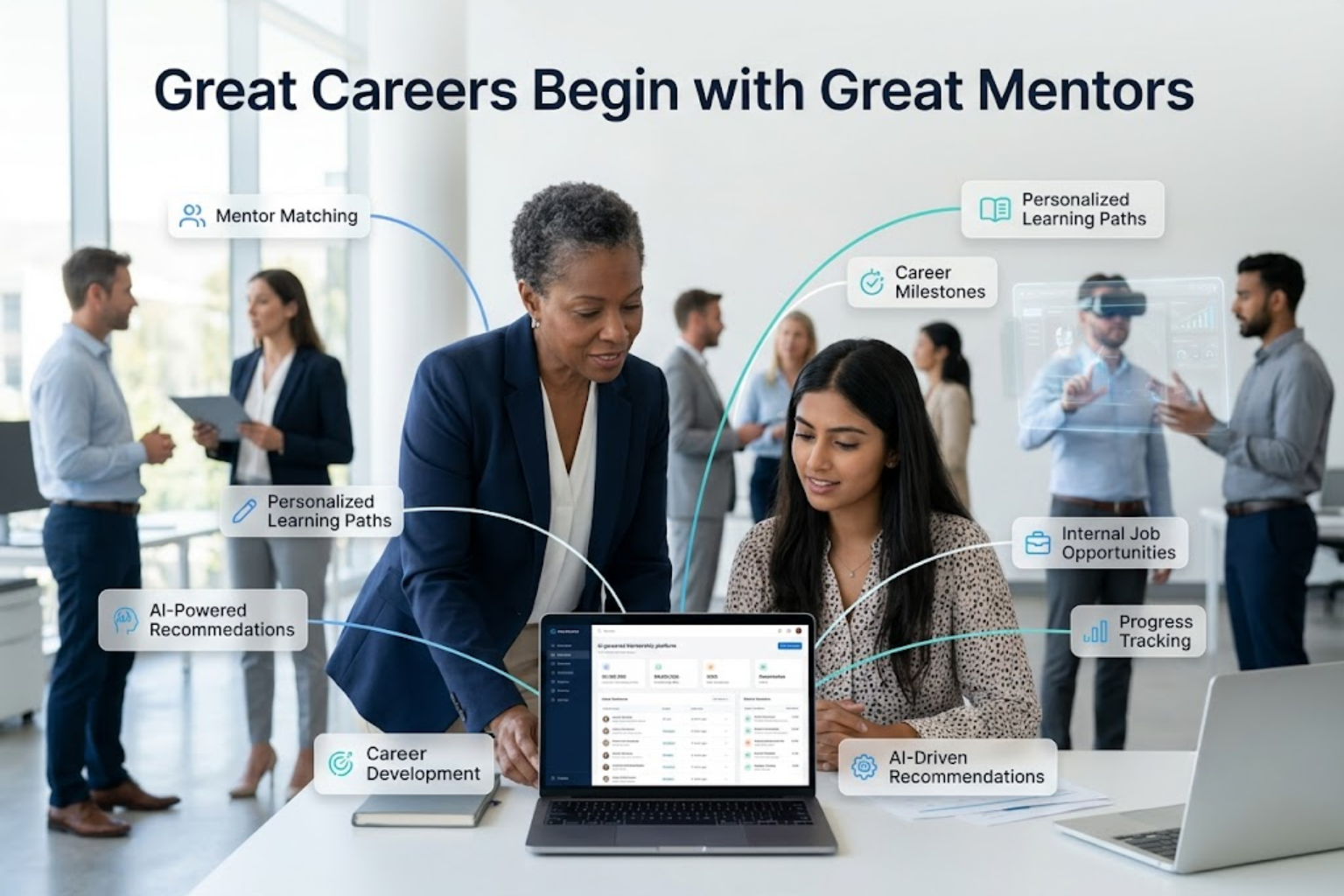
Employees can easily search for mentors based on skills, experience, or career goals, making it easier to find meaningful connections.
Intelligent Mentor–Mentee Matching
Smart matching systems use technology to pair mentors and mentees based on:
- Professional interests
- Skill gaps
- Career aspirations
- Department expertise
This data-driven approach increases the likelihood of productive and valuable mentorship relationships.
Seamless Scheduling and Collaboration
Integrated scheduling tools allow employees to book mentorship sessions without endless email chains. Some platforms also integrate with video conferencing tools, enabling virtual mentorship from anywhere in the world.
This flexibility is particularly important for remote and hybrid workplaces.
The Role of Immersive Learning Technologies
One of the most exciting developments in mentorship technology is the integration of immersive tools such as Extended Reality (XR).
XR includes technologies like:
- Virtual Reality (VR)
- Augmented Reality (AR)
- Mixed Reality (MR)
These technologies allow mentorship sessions to go beyond traditional conversations.
For example, employees can participate in simulated workplace scenarios, interactive training environments, or collaborative virtual workshops. This immersive approach makes learning more engaging and memorable.
By combining mentorship guidance with immersive experiences, organizations can accelerate skill development in ways that traditional training cannot achieve.
Supporting Internal Talent Mobility
Another major benefit of modern mentorship platforms is the ability to connect mentorship with internal career opportunities.
Employees often want to grow within their organizations, but they may not know which roles match their skills or career ambitions.
Digital mentorship systems can help by:
- Mapping employee skills and experiences
- Identifying career development opportunities
- Matching employees with internal job openings
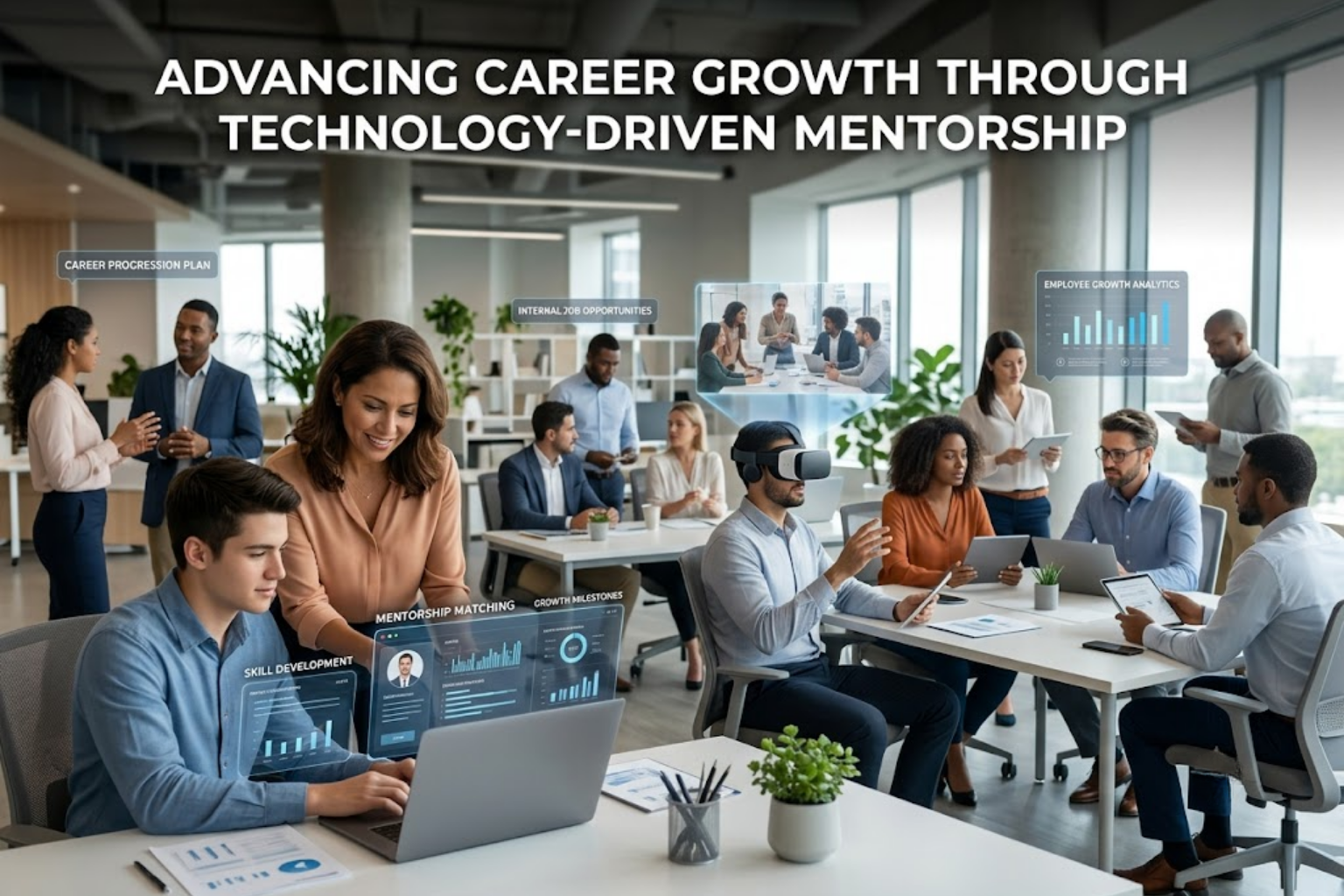
This approach helps organizations retain valuable talent while giving employees clear career growth pathways.
Building a Culture of Continuous Learning
Organizations that invest in mentorship platforms often see cultural transformation.
Instead of learning happening only during occasional training sessions, employees become part of an ongoing knowledge-sharing ecosystem.
Mentors share real-world experience, mentees gain practical insights, and organizations develop a culture where learning is continuous.
Over time, this culture strengthens collaboration, innovation, and leadership development.
The Business Impact of Structured Mentorship
Well-designed mentorship programs can deliver measurable benefits for organizations.
Some of the most significant advantages include:
- Improved employee retention
- Faster onboarding for new hires
- Stronger leadership pipelines
- Increased cross-department collaboration
- Enhanced problem-solving capabilities
When mentorship is supported by technology, these benefits become even more powerful because programs can scale across entire organizations.
Preparing for the Future of Work
The future of work will demand continuous learning, adaptability, and strong collaboration across teams and industries.
Mentorship platforms provide organizations with a strategic way to prepare employees for that future. By combining mentorship guidance, technology-driven matching, and immersive learning experiences, companies can create a modern workforce capable of solving complex challenges.
Organizations that embrace intelligent mentorship systems today are not just supporting individual career growth. They are building the foundation for innovation, resilience, and long-term success.
Conclusion
Mentorship has always been a cornerstone of professional development. However, the digital era is redefining how mentorship works.
By leveraging centralized platforms, smart mentor matching, immersive learning technologies, and internal talent mobility tools, organizations can transform mentorship into a powerful engine for growth.
As businesses continue to evolve, the companies that prioritize structured mentorship will be better equipped to empower their employees, strengthen their workforce, and lead in the future economy.


Leave a reply